
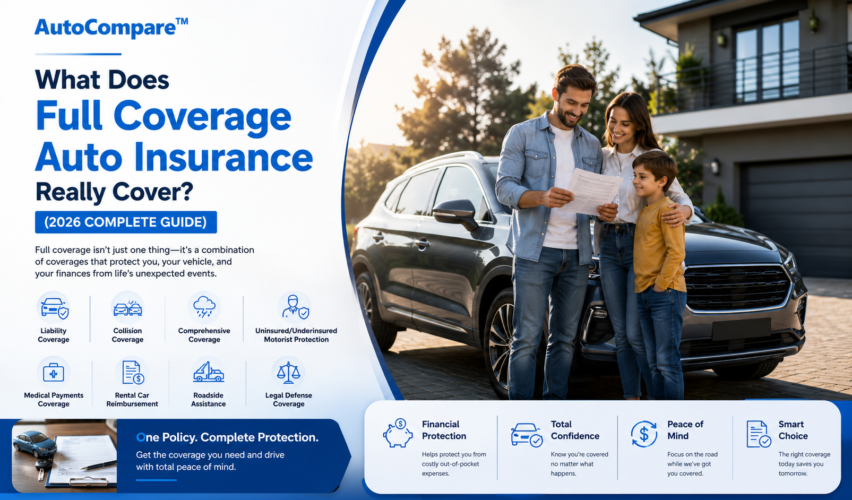
When shopping for car insurance, you’ve probably heard the term full coverage auto insurance. While many drivers assume it protects against every possible situation, that’s not entirely true. Full coverage isn’t a specific insurance policy—it’s a combination of coverages that provide broader financial protection than the minimum legal requirements.
Understanding what’s included—and what’s not—can help you choose the right policy and avoid costly surprises after an accident.
What Is Full Coverage Auto Insurance?
Full coverage auto insurance generally combines three essential types of protection:
- Liability Insurance
- Collision Coverage
- Comprehensive Coverage
Together, these coverages help protect you financially if you’re involved in an accident or your vehicle is damaged by events beyond your control.
Liability Insurance
Liability insurance covers damage or injuries you cause to other people if you’re responsible for an accident.
It usually includes:
- Bodily Injury Liability
- Property Damage Liability
Most states require drivers to carry at least minimum liability insurance.
Collision Coverage
Collision coverage helps pay for repairs to your own vehicle after an accident, regardless of who caused it.
Examples include:
- Hitting another vehicle
- Colliding with a guardrail
- Striking a pole
- Single-vehicle accidents
Collision coverage is especially valuable for newer or financed vehicles.
Comprehensive Coverage
Comprehensive insurance protects your vehicle from non-collision events.
Common covered situations include:
- Vehicle theft
- Fire damage
- Flooding
- Hailstorms
- Falling trees
- Vandalism
- Animal collisions
This coverage offers peace of mind against unexpected events outside your control.
What Full Coverage Does NOT Include
Despite its name, full coverage doesn’t protect against every situation.
Most policies do not automatically cover:
- Routine maintenance
- Mechanical breakdowns
- Tire wear
- Engine failure
- Personal belongings inside the vehicle
- Intentional damage
- Driving for commercial purposes without proper coverage
Always review your policy carefully to understand any exclusions.
Additional Coverage You May Want
Depending on your needs, you can enhance your policy with optional protections such as:
- Uninsured/Underinsured Motorist Coverage
- Roadside Assistance
- Rental Car Reimbursement
- Gap Insurance
- Medical Payments Coverage
- Personal Injury Protection (PIP)
These add-ons can provide extra financial security in specific situations.
Who Should Consider Full Coverage?
Full coverage is often recommended if you:
- Own a new or newer vehicle
- Lease or finance your car
- Drive regularly
- Live in an area with high theft or severe weather
- Want greater financial protection after an accident
For older vehicles with low market value, paying for full coverage may not always be cost-effective.
How to Save Money on Full Coverage Auto Insurance
You don’t have to sacrifice protection to lower your premium.
Consider these strategies:
- Compare quotes from multiple insurers.
- Bundle home and auto insurance.
- Increase your deductible if affordable.
- Maintain a clean driving record.
- Ask about available discounts.
- Improve your credit score where applicable.
- Install anti-theft devices in your vehicle.
Even small adjustments can lead to meaningful savings over time.
Frequently Asked Questions
Is full coverage required by law?
No. Most states only require minimum liability insurance. However, lenders usually require full coverage if your vehicle is financed or leased.
Does full coverage include windshield damage?
It depends on your insurer and policy. Comprehensive coverage often includes windshield damage, but deductibles and state laws may vary.
Can I remove full coverage later?
Yes. Once your vehicle’s value decreases or your loan is paid off, you may decide to adjust your coverage based on your financial situation.
Final Thoughts
Full coverage auto insurance offers broad protection by combining liability, collision, and comprehensive coverage. While it doesn’t cover every possible event, it provides valuable financial security against many of the most common risks drivers face.
Before purchasing a policy, compare quotes, review coverage limits, and understand any exclusions so you can choose protection that matches both your vehicle and your budget.