
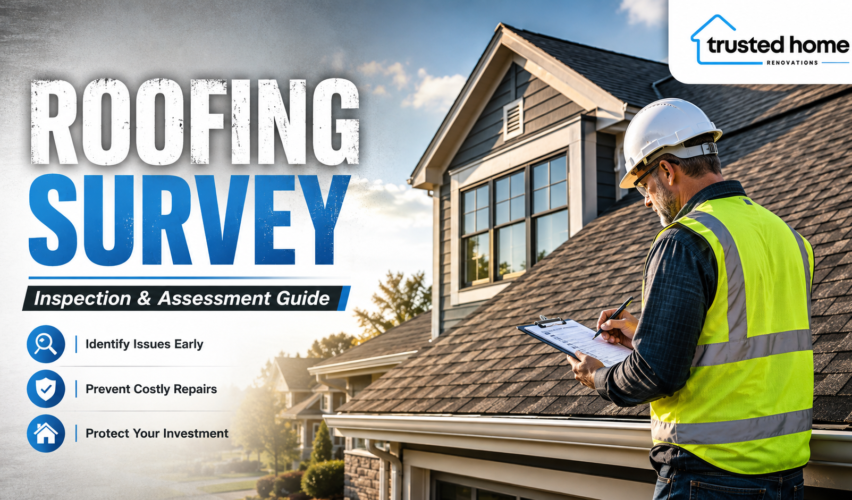
A roofing survey is an essential step in understanding the current condition, performance, and remaining life of a roof. Whether you own a residential property, manage a commercial building, or are preparing to buy or sell a property, a professional roofing survey can identify potential problems before they become expensive repairs.
What Is a Roofing Survey?
A roofing survey is a detailed assessment of a roof’s condition. A qualified professional examines the roof covering, structural components, drainage systems, flashing, insulation, and other important areas to identify existing damage and potential risks.
The purpose of a survey is not simply to find visible defects. It provides a clearer understanding of the roof’s overall condition and helps property owners make informed decisions about maintenance, repairs, replacement, and future budgeting.
Why Is a Roofing Survey Important?
Regular roof surveys can help identify minor problems before they develop into major issues. Damaged shingles, cracked membranes, deteriorated flashing, blocked gutters, and water penetration can gradually cause significant structural and interior damage if left untreated.
A professional survey can also help property owners prioritize necessary work and avoid unnecessary expenses. Instead of waiting for a leak or serious failure, owners can address problems at an earlier and more manageable stage.
What Does a Roofing Survey Include?
A comprehensive roofing survey may evaluate several key components:
- Roof covering: Checking shingles, tiles, membranes, metal panels, or other roofing materials for damage and deterioration.
- Flashing: Inspecting areas around chimneys, vents, skylights, walls, and roof edges for signs of failure.
- Drainage: Examining gutters, downpipes, outlets, and other drainage components for blockages or inadequate water flow.
- Roof structure: Looking for signs of sagging, movement, deterioration, or other structural concerns.
- Water damage: Identifying stains, moisture, leaks, or evidence of previous water intrusion.
- Roof accessories: Checking vents, skylights, penetrations, and other installations that may affect roof performance.
- General condition: Assessing the roof’s age, maintenance history, visible defects, and estimated remaining service life.
Common Roofing Problems Identified During a Survey
A roofing survey may uncover a variety of issues, including missing or damaged shingles, cracked tiles, loose materials, deteriorated seals, damaged flashing, standing water, blocked drainage systems, moss or organic growth, and moisture penetration.
Some problems may require immediate attention, while others can be monitored as part of a planned maintenance program. The survey report should clearly explain the severity of each issue and recommend appropriate next steps.
Benefits of Professional Roofing Surveys
A professional roofing survey provides several important benefits:
- Early problem detection: Identifies issues before they become more expensive.
- Better maintenance planning: Helps property owners schedule repairs based on priority.
- Improved budgeting: Provides useful information for estimating future roofing expenses.
- Greater property confidence: Gives owners a clearer understanding of the roof’s condition.
- Reduced risk: Helps address defects that could lead to leaks or structural damage.
- Better decision-making: Supports informed choices between repair, maintenance, and replacement.
When Should You Have a Roofing Survey?
A roofing survey can be useful at several stages. Property owners may arrange one as part of routine maintenance, after severe weather, before purchasing a property, before selling a property, or when recurring leaks and other roofing problems appear.
Older roofs may also benefit from more frequent professional assessments because materials naturally deteriorate over time.
What Happens After the Survey?
After completing the inspection, the roofing professional should provide a report outlining the roof’s condition and any identified defects. Depending on the findings, recommendations may include routine maintenance, minor repairs, more extensive restoration, or complete roof replacement.
The most appropriate solution depends on the roof’s age, construction, condition, repair history, and expected remaining service life.
Choosing a Roofing Survey Professional
When selecting a roofing survey provider, consider their experience, qualifications, inspection process, reporting standards, and reputation. A reliable professional should provide clear findings rather than simply recommending unnecessary work.
It is also helpful to ask whether the survey includes photographs, detailed observations, repair recommendations, and an assessment of priority issues.
Conclusion
A roofing survey is a valuable investment in protecting a property and managing long-term maintenance costs. By identifying defects early and providing a clear picture of the roof’s condition, a professional survey allows property owners to make informed decisions and plan necessary work before minor issues become major problems.
Whether you are maintaining an existing property, preparing for a transaction, or concerned about the condition of an aging roof, a professional roofing survey can provide the information you need to move forward with confidence.