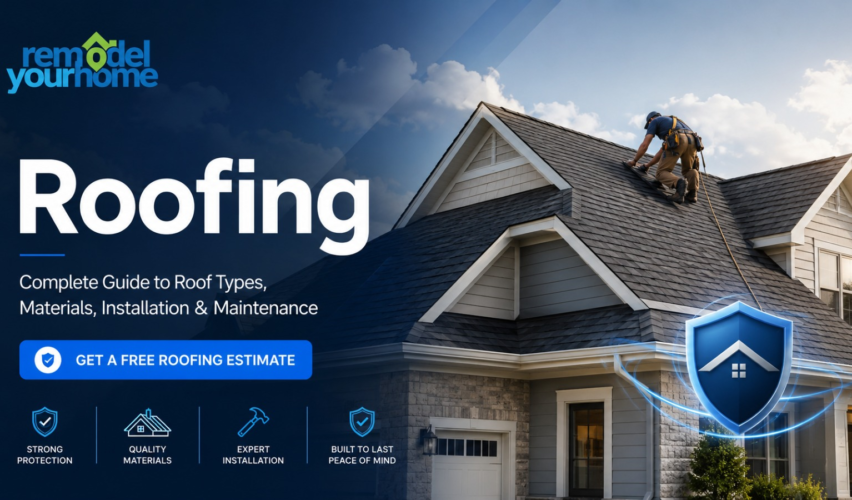
A roof is one of the most important components of any building. It protects the structure and its occupants from rain, wind, heat, snow, and other environmental conditions while also contributing to energy efficiency, appearance, and property value. Choosing the right roofing system and maintaining it properly can significantly extend the life of a building and prevent expensive structural damage.
Whether you are constructing a new home, replacing an aging roof, or simply learning how to maintain your existing roofing system, understanding the available roof types, materials, installation methods, and maintenance requirements is essential.
This comprehensive guide explains everything you need to know about roofing, from selecting the right material to identifying common problems and deciding when repairs or replacement are necessary.
What Is Roofing?
Roofing refers to the materials, systems, and construction techniques used to create the protective covering at the top of a building. A complete roofing system typically consists of several layers and components working together to provide weather protection, drainage, insulation, ventilation, and structural support.
A typical roofing system may include:
- Roof decking or sheathing
- Underlayment
- Roofing material
- Flashing
- Gutters and downspouts
- Roof ventilation
- Insulation
- Ridge caps and other finishing components
The exact construction depends on the building design, climate, roof slope, and selected roofing material.
Why Is a Good Roof Important?
A properly designed and installed roof provides much more than protection from rain. It plays an important role in the overall performance of a building.
1. Protection From Weather
The primary purpose of a roof is to protect the interior from rain, wind, sunlight, snow, hail, and temperature fluctuations.
2. Energy Efficiency
A well-insulated and properly ventilated roof can help regulate indoor temperatures. Reflective or energy-efficient roofing materials may also reduce heat absorption in warm climates.
3. Structural Protection
Water infiltration can damage insulation, ceilings, walls, timber, electrical systems, and other structural components. A reliable roof helps prevent these problems.
4. Improved Appearance
Roofing has a major influence on a property’s exterior appearance. The right material, color, and design can complement the architectural style of a home or commercial building.
5. Increased Property Value
A well-maintained roof can improve the overall condition and marketability of a property. Conversely, a damaged or deteriorating roof can become a significant concern for potential buyers.
Major Types of Roofs
Roof designs vary according to architecture, climate, drainage requirements, available space, and construction budget.
1. Gable Roof
A gable roof has two sloping sides that meet at a central ridge, creating triangular sections at the ends of the building.
Advantages:
- Simple and cost-effective design
- Excellent water drainage
- Good ventilation potential
- Suitable for many architectural styles
Disadvantages:
- Can be vulnerable to strong winds if not properly engineered
- Requires appropriate structural support in areas with severe weather
2. Hip Roof
A hip roof slopes downward on all four sides of a building.
Advantages:
- Stable and structurally strong
- Performs well in windy conditions
- Provides consistent drainage
- Attractive and versatile appearance
Disadvantages:
- More complex and potentially more expensive to construct than a basic gable roof
- Provides less attic space in some designs
3. Flat Roof
A flat roof has little visible slope, although properly constructed flat roofs normally include a slight gradient to direct water toward drainage points.
Flat roofs are common on commercial buildings and modern residential properties.
Advantages:
- Modern appearance
- Efficient use of building space
- Can accommodate rooftop equipment or usable areas when properly designed
- Relatively simple geometry
Disadvantages:
- Requires excellent waterproofing and drainage
- Standing water can cause problems if drainage is inadequate
- Maintenance can be particularly important
4. Mansard Roof
A mansard roof has four sides with two slopes on each side. The lower slope is typically much steeper than the upper slope.
This design can provide significant usable space beneath the roof.
5. Gambrel Roof
A gambrel roof has two different slopes on each side and is commonly associated with barns and traditional country-style buildings.
Its shape can provide substantial upper-level or attic space.
6. Shed or Mono-Pitch Roof
A shed roof consists of a single sloping surface. It is increasingly used in contemporary architecture and extensions.
Its simplicity can make it practical for certain building designs, while its slope can provide effective rainwater drainage.
7. Butterfly Roof
A butterfly roof has two roof surfaces that slope inward toward a central valley. It can provide a distinctive modern appearance and may be incorporated into rainwater collection systems.
Because of its unusual drainage design, professional waterproofing and maintenance are particularly important.
Common Roofing Materials
Selecting the appropriate roofing material is one of the most important decisions in a roofing project. Factors such as climate, budget, building design, expected lifespan, maintenance requirements, and local building regulations should all be considered.
Asphalt Shingles
Asphalt shingles are among the most widely used roofing products for residential buildings.
They are available in different styles, colors, and performance levels.
Benefits include:
- Relatively affordable
- Easy to install
- Widely available
- Available in numerous designs
- Suitable for many residential applications
Their service life varies considerably depending on product quality, climate, installation, and maintenance.
Metal Roofing
Metal roofing can be manufactured from materials such as steel, aluminum, zinc, or copper.
Modern metal roofing is available in many profiles and finishes and can be designed to resemble other roofing materials.
Advantages:
- Long service life
- Lightweight compared with some traditional materials
- Good resistance to many weather conditions
- Low routine maintenance
- Available in energy-efficient finishes
Potential drawbacks:
- Higher initial cost for some systems
- Improper installation can lead to leaks or corrosion
- Expansion and contraction need to be considered during installation
Clay and Concrete Tiles
Clay and concrete tiles are durable roofing options often used in Mediterranean, Spanish, Southwestern, and other architectural styles.
Advantages:
- Long-lasting
- Attractive appearance
- Excellent resistance to sunlight
- Available in many shapes and colors
- Good thermal characteristics
Disadvantages:
- Heavy
- May require additional structural support
- Individual tiles can break if improperly handled or subjected to impact
Slate Roofing
Natural slate is a premium roofing material known for its durability and distinctive appearance.
A properly installed slate roof can last for many decades.
However, slate is heavy and requires skilled installation. Repairs may also require specialized knowledge.
Wood Shingles and Shakes
Wood roofing can provide a natural and traditional appearance.
Cedar is commonly used because of its natural resistance to certain environmental conditions.
Wood roofing requires appropriate maintenance and may be less suitable in environments where moisture, fire risk, or biological growth is a significant concern.
Synthetic Roofing Materials
Synthetic roofing products are manufactured to reproduce the appearance of materials such as slate, wood, or tile while reducing weight and sometimes simplifying installation.
Quality varies considerably between products, so homeowners should evaluate manufacturer specifications, warranties, testing, and installer experience before making a decision.
Green Roofing
A green roof incorporates vegetation and growing media over a properly engineered waterproofing system.
Green roofs can provide environmental and thermal benefits, but they require specialized structural design, waterproofing, drainage, and ongoing maintenance.
How to Choose the Right Roofing Material
There is no single roofing material that is ideal for every property. Consider the following factors before making a decision.
Climate
Hot, humid, rainy, snowy, coastal, and windy environments create different roofing challenges.
Roof Slope
Some materials require minimum roof pitches for effective drainage and installation.
Budget
Consider both the initial installation price and long-term maintenance and replacement costs.
Lifespan
A cheaper roof may require replacement sooner, while a premium system may cost more initially but last considerably longer.
Maintenance
Consider how frequently the roof will need inspection, cleaning, repair, coating, or replacement of components.
Building Structure
Heavy materials such as some tile and slate systems may require structural evaluation before installation.
Appearance
The roof should complement the building’s architectural style and surrounding environment.
The Roof Installation Process
Professional installation is critical to roofing performance. Even high-quality roofing materials can fail prematurely if installed incorrectly.
1. Inspection and Planning
The contractor evaluates the existing structure, roof dimensions, slope, drainage, ventilation, and condition of the decking.
For new construction, the roof design is coordinated with the structural and architectural plans.
2. Removal of Existing Roofing
During a replacement project, old roofing materials may need to be removed. The underlying decking should then be inspected for deterioration or damage.
3. Repairing the Roof Deck
Damaged, rotten, warped, or otherwise unsuitable decking should be repaired or replaced before new roofing materials are installed.
4. Installation of Underlayment
Underlayment provides an additional protective layer beneath the primary roofing material. The specific product and installation method depend on the roofing system and local requirements.
5. Flashing Installation
Flashing is installed around vulnerable areas such as:
- Chimneys
- Roof valleys
- Skylights
- Vents
- Walls
- Roof penetrations
- Edges and transitions
Proper flashing is essential because these locations are common points of water entry.
6. Installing the Roofing Material
The selected roofing material is installed according to the manufacturer’s instructions and applicable building requirements.
Fastener type, spacing, overlaps, alignment, and installation sequence can all affect performance.
7. Ridge and Edge Finishing
Ridge caps, edge components, vents, and other finishing elements are installed to complete the system and protect vulnerable areas.
8. Gutters and Drainage
Water must be directed safely away from the roof and building. Gutters, downspouts, drains, scuppers, and other drainage components should be properly sized and installed.
9. Final Inspection
The completed roof should be inspected for visible defects, exposed fasteners, damaged materials, inadequate flashing, drainage problems, and other installation issues.
Roofing Maintenance
Regular maintenance is one of the most effective ways to extend roof life and reduce unexpected repair costs.
Inspect the Roof Regularly
A professional inspection can identify problems before they become major failures. Homeowners should also visually inspect accessible areas after severe weather.
Look for:
- Missing or damaged roofing materials
- Cracked or deteriorated components
- Damaged flashing
- Blocked gutters
- Water stains
- Sagging areas
- Excessive moss or biological growth
- Damaged roof penetrations
Keep Gutters and Drains Clear
Blocked drainage can cause water to accumulate on or around the roof. Gutters and downspouts should be cleaned regularly and checked for leaks, loose connections, and blockages.
Trim Overhanging Branches
Trees close to a building can drop branches and debris onto the roof. Overhanging vegetation can also create shaded, damp conditions that encourage biological growth.
Check Attic Ventilation
Adequate ventilation can help manage heat and moisture in the roof assembly. Poor ventilation may contribute to condensation, material deterioration, and reduced energy performance.
Address Small Problems Quickly
A small leak can eventually cause extensive damage. Prompt repairs are generally preferable to allowing a minor roofing defect to develop into a major structural or interior problem.
Common Roofing Problems
Roof Leaks
Leaks may originate from damaged roofing materials, flashing failures, penetrations, valleys, drainage problems, or installation defects.
The location of an interior water stain does not necessarily indicate the exact location of the roof leak because water can travel along building components before appearing indoors.
Missing or Damaged Shingles
Strong winds, severe weather, aging, and improper installation can cause shingles or other roofing components to become damaged or displaced.
Ponding Water
Standing water is a particular concern on low-slope and flat roofing systems. Persistent ponding may indicate drainage or structural problems that require professional evaluation.
Damaged Flashing
Flashing around roof penetrations and transitions is especially vulnerable to deterioration and installation problems.
Moss and Algae
Moisture and shade can encourage moss, algae, and other biological growth. Cleaning should be performed using methods appropriate for the specific roofing material.
Roof Sagging
Sagging can indicate serious structural or moisture-related problems. A visibly sagging roof should be professionally assessed as soon as possible.
Roof Repair vs. Roof Replacement
One of the most common questions homeowners face is whether to repair an existing roof or replace it entirely.
Repair May Be Appropriate When:
- Damage is localized
- Most of the roof remains in good condition
- The underlying structure is sound
- The roof is relatively young
- The problem can be properly corrected
Replacement May Be Appropriate When:
- The roof has reached the end of its expected service life
- Damage is widespread
- Repeated repairs are required
- There are extensive leaks
- Roofing materials have deteriorated significantly
- The roof deck or underlying structure has substantial damage
A professional roofing contractor should evaluate the entire system before recommending replacement.
How Long Does a Roof Last?
Roof lifespan varies significantly based on material, installation quality, climate, ventilation, maintenance, exposure, and product quality.
As a general guide, different roofing systems can have substantially different service lives:
| Roofing Material | Typical Service-Life Range* |
|---|---|
| Basic asphalt shingles | 15–25 years |
| Higher-quality asphalt shingles | 20–30+ years |
| Metal roofing | 30–70+ years |
| Wood shingles/shakes | 20–40 years |
| Clay/concrete tile | 40–75+ years |
| Natural slate | 50–100+ years |
| Synthetic roofing | Varies by product |
*These are broad industry ranges rather than guarantees. Manufacturer specifications and local environmental conditions should always be considered.
Roofing Cost Factors
Roofing costs vary widely between projects. Rather than focusing only on the price per square foot, property owners should consider the complete project.
Important cost factors include:
- Roof size
- Roof pitch
- Building height
- Roofing material
- Labor rates
- Existing roof removal
- Decking repairs
- Flashing replacement
- Ventilation requirements
- Insulation
- Gutters and drainage
- Geographic location
- Accessibility
- Permits and code requirements
The lowest initial quotation is not always the least expensive option over the life of the roof. Material quality, installation standards, warranties, and expected service life should also be considered.
Roofing Safety
Roofing work can be hazardous. Falls, unstable surfaces, electrical hazards, tools, weather conditions, and structural weaknesses can create serious risks.
Property owners should avoid climbing onto a roof unless they have the appropriate experience, equipment, and conditions.
Professional roofing contractors should follow applicable safety requirements and use appropriate fall protection, ladders, scaffolding, personal protective equipment, and work procedures.
How to Select a Roofing Contractor
Choosing a qualified contractor is just as important as selecting the roofing material.
Before hiring a contractor, consider:
- Experience: Ask how long the company has been performing similar roofing work.
- References: Request examples of comparable completed projects.
- Insurance: Confirm appropriate insurance coverage.
- Licensing: Check applicable local licensing requirements.
- Written Estimate: Obtain a detailed written proposal.
- Materials: Confirm the exact products and specifications being used.
- Warranty: Understand both manufacturer and workmanship warranties.
- Contract: Make sure the scope, payment terms, timeline, materials, and responsibilities are documented.
Avoid making a decision based solely on the lowest quotation.
Sustainable Roofing Options
Environmental considerations are becoming increasingly important in roofing decisions.
Depending on the project, sustainable strategies may include:
- Reflective roofing materials
- Long-life roofing systems
- Recycled or recyclable materials
- Solar-compatible roof designs
- Green roofs
- Improved insulation
- Proper roof ventilation
- Rainwater management systems
The most sustainable choice often involves balancing material production, transportation, durability, maintenance, energy performance, and end-of-life considerations.
Roofing and Energy Efficiency
A roof can significantly affect a building’s thermal performance.
Energy-efficient roofing should be considered as part of a complete building-envelope strategy that may include:
- Adequate insulation
- Air sealing
- Proper ventilation
- Reflective roof surfaces where appropriate
- Efficient windows
- Proper moisture control
In hot climates, reducing solar heat gain can be particularly important. In colder climates, insulation and moisture management become critical considerations.
Frequently Asked Questions
How often should a roof be inspected?
A roof should generally be inspected periodically, with additional inspections after significant storms or other severe weather events. The appropriate frequency depends on the roofing material, age, climate, and condition.
Can I install a new roof over an old one?
In some circumstances, roofing materials can be installed over an existing layer. However, this depends on the roofing system, existing conditions, local requirements, and manufacturer instructions. A professional assessment should be completed before deciding.
What is the most durable roofing material?
Natural slate, quality metal roofing, and certain tile systems can provide very long service lives when properly designed, installed, and maintained. Durability depends on more than the material itself.
What causes most roof leaks?
Common causes include damaged roofing materials, failed flashing, deteriorated seals, roof penetrations, drainage problems, and installation defects.
Should I repair a roof leak myself?
Minor maintenance tasks may be suitable for some property owners, but roof repairs can involve significant safety risks and hidden damage. Professional evaluation is recommended when the source or severity of a leak is uncertain.
How can I extend the life of my roof?
Regular inspections, prompt repairs, clean drainage systems, proper ventilation, appropriate cleaning, and professional maintenance can help extend the service life of many roofing systems.
Final Thoughts
A roof is a long-term investment that protects the entire building. Selecting an appropriate roof design and material, using qualified installers, maintaining drainage and ventilation, and addressing problems early can significantly improve performance and longevity.
The best roofing solution depends on the property’s location, climate, architecture, structural requirements, budget, and long-term objectives. Instead of choosing a roofing system based solely on appearance or initial price, consider the complete life cycle of the roof—from design and installation to maintenance, repair, energy performance, and eventual replacement.
With proper planning and professional workmanship, a well-designed roofing system can provide dependable protection and value for many years.